Aspen could play a significant role in forest adaptation to climate change
15. 5. 2024
An international team of forestry scientists, led by experts from the FFWT MENDELU, have conducted a study focusing on the common (Eurasian) aspen (Populus tremula), a tree species once abundant in Central European forests but now overlooked. In regions of the Northern Hemisphere where aspen stands occur, including the North American quaking aspen (Populus tremuloides), they significantly contribute to increasing biological diversity. Scientists believe that aspen could play a similarly important role in domestic forests. For this purpose, they conducted analysis of more than four million forest stands across the Czech Republic. The analysis confirmed that aspen is a promising species for Czech forestry both in terms of supporting biodiversity and in enabling forests to adapt to climate change, where it can serve as a preparatory tree species.
In the past, the aspen was much more widespread. However, this changed due to the commercial orientation of forest management, which favoured uniform stands in terms of species and structure. To better understand the historical context of aspen occurrence and its spatial and site requirements, scientists analysed more than four million forest stands and groups of stands throughout the Czech Republic. They utilized existing data on the size of forest estates, types of planning, and the categorization of forests with assigned management intensity: “The survey revealed that the occurrence of aspen is statistically significantly associated with the size of the forest estate and the forest category, i.e. the type and intensity of management. In terms of site requirements, which we refer to as the ‘realized niche,’ encompassing both a production and ecological optimum, we also assessed the ecological characteristics of the site based on forest typology, which is one of the significant results of the study,” explained its lead author Antonín Kusbach.
The experts based their analysis not only on historical field measurements, i.e. data from forest management plans, but also utilized modern remote sensing methods and sophisticated analytical techniques.
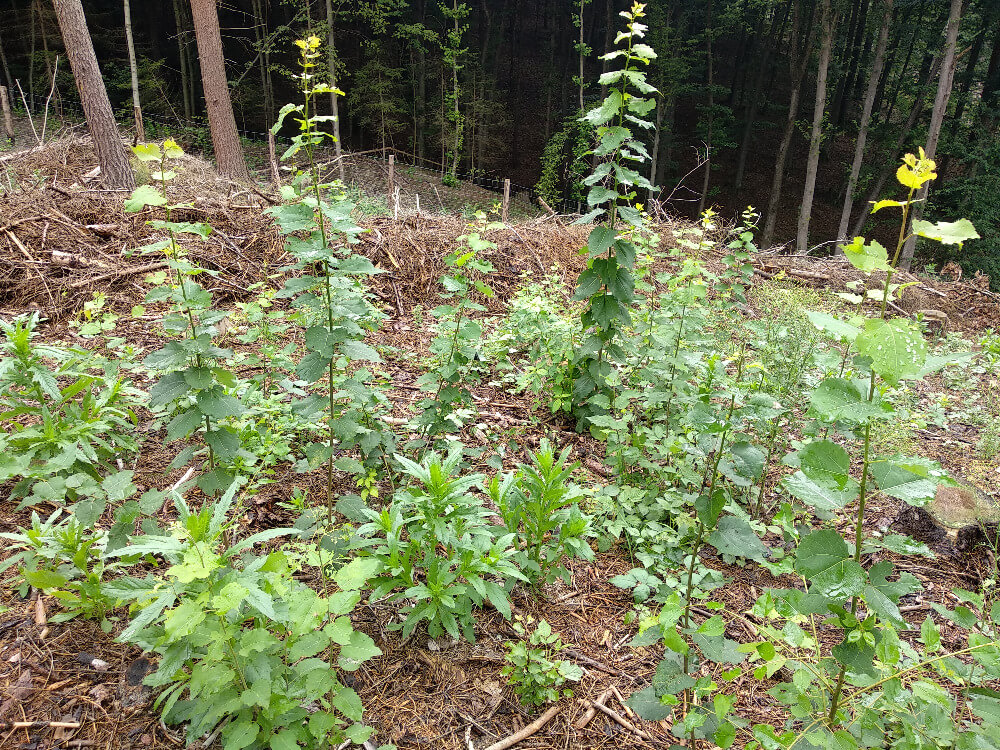
The Eurasian aspen is an excellent pioneer species. Foresters are once again beginning to utilize its ameliorative capabilities in so-called phased forest renewal, where aspen serves as a pioneer species for subsequent species that naturally regenerate beneath the aspen or are planted by foresters. Young aspens need to be protected with fencing to prevent damage by browsing wildlife. Photo: A. Kusbach.
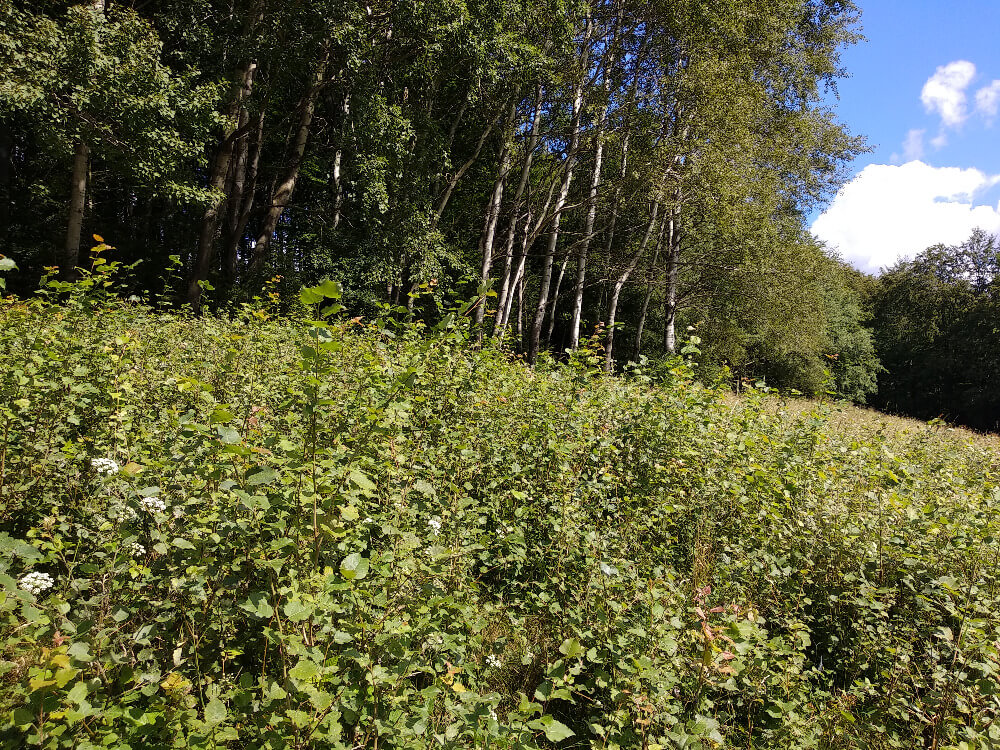
The Eurasian aspen reproduces very well vegetatively. It produces fast-growing root shoots that appear up to several dozen meters from the parent tree. The picture shows a meadow gradually overgrown with aspen. Natural forest area 40, Moravian-Silesian Beskydy. Photo: A. Kusbach.
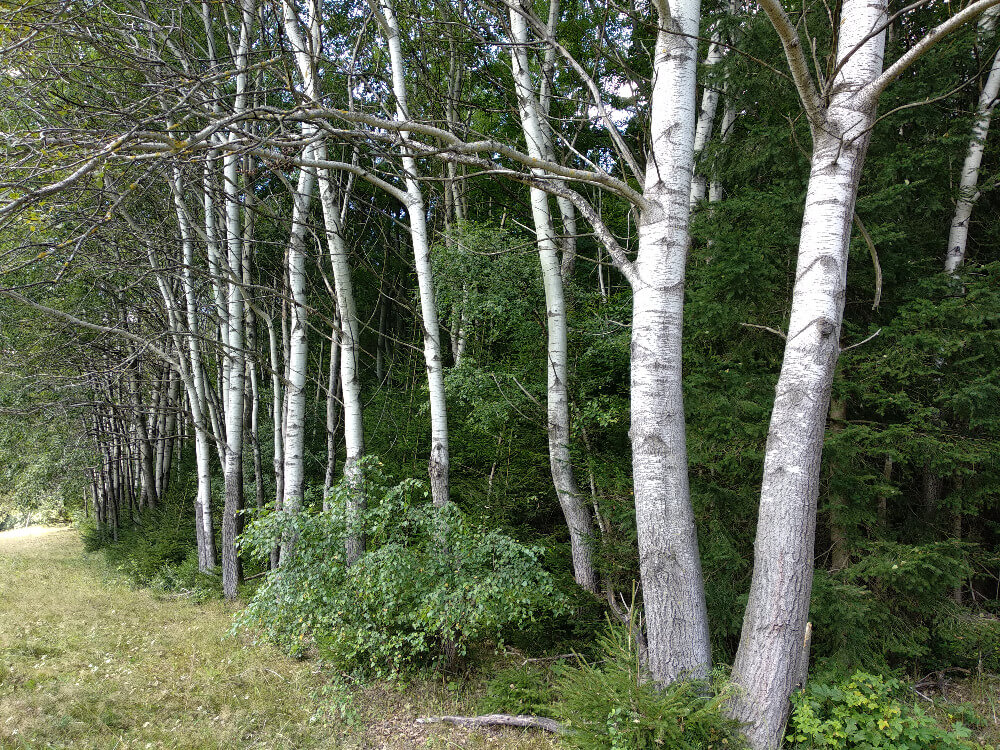
The Eurasian aspen creates favourable microclimatic and soil conditions for longer-living trees such as spruce, fir or beech. The picture shows an older aspen with younger spruce growth. Natural forest area 40, Moravian-Silesian Beskydy. Photo: A. Kusbach.
Aspen systems are capable of rapid regeneration and colonization of new sites, indicating their resilience to disturbances such as fire, disease, insect infestation, or gale-force winds, which experts predict in climate change scenarios: “It is sometimes said that, in North America, you can walk from coast to coast and never leave the shade of aspen. Maybe that’s not entirely true, but it speaks for the flexibility and adaptability of this tree species. It shows the great potential of aspen,” said Paul C. Rogers, co-author of the study from the Western Aspen Alliance, Ecology Centre, and Department of Environment and Society at Utah State University, speaking of the future of aspen in Europe.
The idea of a promising future for aspen in Europe is also supported by on-site inspection: “Our field observations indicate that aspen has naturally found its way into Central European forests after the extensive decline of Norway spruce due to bark beetle outbreaks. I think this is also because forestry practice has changed its view on the role of pioneer species, primarily aspen and birch, compared to years ago when they were rigorously eliminated from stands. Thanks to its very good regenerative abilities, aspen thrives in stands and can become one of the pioneer species in multi-phase natural forest regeneration,” Kusbach summarized the topic.
The study results were published in the scientific journal PLOS ONE.
Contact for further information: Ing. Antonín Kusbach, Ph.D., Department of Forest Botany, Dendrology, and Geobiocoenology, +420 545 134 557, antonin.kusbach@mendelu.cz
We work with cookies. Why? We analyse traffic and events on the website so that we can continually improve it. We also need cookies to provide social media features and to customise the content of ads. With consent, we may also pass some personal information to marketing platforms for marketing purposes.
About Cookies
Cookies are small text files in which websites can store information about your activity on the website and user preferences. They are used, for example, to make the browser remember your login, the consent settings in the cookie bar and, with your consent, various marketing and analytical information.
Necessary
These cookies ensure the basic technical functionality of the website, are necessary for the proper functioning of this website and are always active.
Analytical
We use third-party tools to track traffic. According to Google Analytics settings, personal data may also be sent.
Preferential
They store your personal settings, such as the language in which information is displayed, or allow you to offer content tailored to your needs.
Marketing
We are using third-part marketing cookies and your personal data to show you content customized to what you have viewed on our website. The content can be viewed elsewhere on the Internet. You can disagree with using of our marketing cookies but it will not reduce the extent of advertising offers you see, you will only see more of uninteresting and irrelevant ad to you.