Departmental Description – what we do
- The Department of Forest Protection and Wildlife Management focuses on forest conservation, with particular emphasis on how pathogens and pests respond to changing environmental conditions driven by global climate change and anthropogenic pressures, including forest dieback. We adopt a contemporary approach to addressing challenges in the conservation of woody plants, particularly regarding defence mechanisms and protection against pest infestations. Our research is focused on identifying solutions within the current framework of host–pathogen–external environment interactions. An important part of our research also focuses on interactions between plants and soil organisms, especially mycorrhizal fungi, using modern ecophysiological and molecular biological methods to study biodiversity and functions in the soil environment. Stress physiology helps us answer the fundamental question of why plants—or, more specifically die.
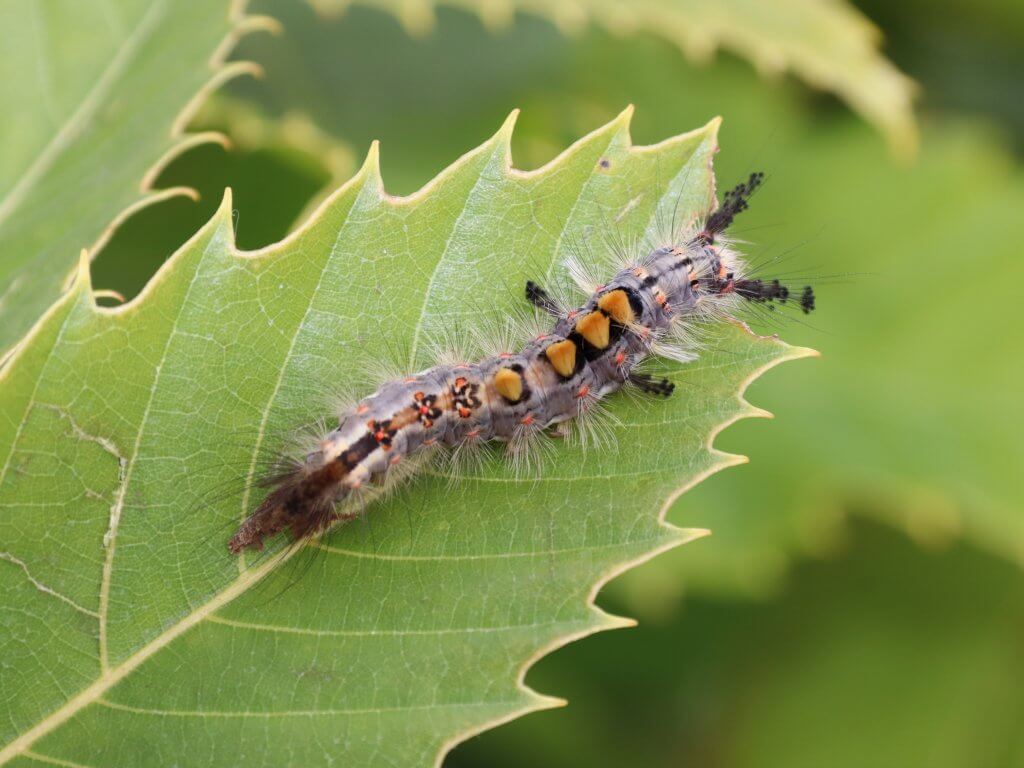
- Forest entomology, a key research area for the department, addresses the comprehensive protection of forest ecosystems and woody plants as associated with insects. The current research agenda is primarily focused on the following key areas: Impact of insects on tree decline,ecology of forest-important and invasive beetle species, conservation of endangered insect species, promotion of biodiversity.
- In the field of wildlife management, in addition to traditional topics such as animal ecology, game anatomy and physiology, we focus on management of game populations (e.g. in urban environments), hunting economics, game breeding, the ethology of game and other selected animals (e.g. invasive species) and conservation of the wildlife gene pool.
- One of our profile topics is the search for solutions to the significant damage caused by wild game. Our core focus is the management of wildlife populations in cultural landscapes with the aim of mitigating conflicts and establishing a functional, systematic model of measures aligned with the needs of forestry and nature conservation. In doing so, we recognise the importance of considering the sociological, veterinary and hygienic aspects associated with wildlife in both natural environments and in newly settled areas, as well as the utilisation of wildlife products.
Background – where we work
- Building B on the University campus – the 2nd and 3rd floors house the academic staff offices, classrooms B12 and B22, the Department’s entomological, phytopathological, zoological and hunting laboratories and its extensive entomological, phytopathological and hunting collections.
- The Phytophthora Research Centre – located on the ground floor of Building Z, the Centre is a newly constructed, cutting-edge facility dedicated to research on pathogens, particularly those belonging to the genus Phytophthora.
- The photoeclector station at the research center in Utěchov represents a modern and unique large-capacity facility for rearing insects from wood.

Collaboration – we are not alone
- Without collaboration with research organisations and commercial entities, we could not do our work. Our Department has been cooperating with different types of organisation for many years, both on a project basis and in teaching our students. We cooperate with forest owners and managers, research institutions and universities from all over the world, and together we produce results for both commercial businesses and the general public.
- MUNI – Masarykova univerzita
- ČZU – Česká zemědělská univerzita v Praze
- JČU – Jihočeská univerzita v Českých Budějovicích
- VETUNI – Veterinární univerzita Brno
- Výzkumný ústav lesního hospodářství a myslivosti, v. v. i.
- Ústav pro hospodářskou úpravu lesů, v. v. i.
- ÚPOL – Univerzita Palackého v Olomouci
- ÚKZUZ – Ústřední kontrolní a zkušební ústav zemědělský
- AOPK ČR – Agentura ochrany přírody a krajiny ČR
- Biologické centrům AV ČR
- Mikrobiologický ústav AVČR
- Moravské zemské muzeum
- IFER – Ústav pro výzkum lesních ekosystémů – je nezávislá výzkumná organizace se zaměřením na produkční ekologii lesa, metody statistické inventarizace
- CzechGlobe – Ústav výzkumu globální změny Akademie věd České republiky – je veřejná výzkumná instituce zabývající se příčinami a dopady globální změny klimatu
- Ústav biologie obratlovců Akademie věd České republiky
- Lesy České republiky, s. p. – podnik obhospodařující více než 1,3 mil. ha lesního majetku a 38 tis. km vodních toků a bystřin
- Vojenské lesy a statky, s. p. – účelová organizace spravující asi 5% lesní půdy ČR, 70 km2 zemědělské půdy
- Lesy města Brna, a.s.
- Sdružení vlastníků obecních a soukromých lesů v ČR – organizace sdružující více než 600 přímých členů (cca 1250 vlastníků lesů) s celkovou výměrou 398 tis. ha lesa
- Národní park České Švýcarsko
- Národní park Šumava
- Horákovy školky – přední školkařská firma v ČR i v Evropě
- Svaz školkařů ČR – spolek sdružující více než 90 pěstitelů okrasných rostlin
- ARBOEKO – jeden z největších podniků v oblasti pěstování, prodeje a distribuce okrasných dřevin
- Myslivecká nadace prof. Josefa Hromase
- SocioFactor s.r.o.
- Progles s.r.o.
- STEELPARK s.r.o.
- YAMACO Software s.r.o.
- PDS s.r.o.
- HF Biz s.r.o
- Město Brno
- BOKU – Universität für Bodenkultur Wien, AUSTRIA
- BFW – Bundesforschungs- und Ausbildungszentrum für Wald, Naturgefahren und Landschaft, Wien, AUSTRIA
- FABI – Forestry and Agricultural Biotechnology Institute, University of Pretoria, Pretoria, SOUTH AFRICA
- SLU – Swedish University of Agricultural Sciences, Uppsala, SWEDEN
- TUZVO – Technická univerzita vo Zvolene, Zvolen, SLOVENSKÁ REPUBLIKA
- NIBIO – Norwegian Institute of Bioeconomy Research, Ås, NORWAY
- NLC – Národní lesnické centrum, Zvolen, SLOVENSKÁ REPUBLIKA
- IREC – Institute for Game and Wildlife Research (IREC), Ciudad Real, SPAIN
Departmental staff – who we are
We are a broad collective of scientists and experienced teachers with many years of experience in all disciplines covered by the field of forest conservation and hunting. Our strengths lie in the high level of internationalisation in our team and our long-term cooperation with partners around the world.
Head of department – Department of Forest Protection and Wildlife Management
Department of Forest Protection and Wildlife Management
Staff
-
prof. Ing. Miloš Barták, CSc.
Academic staff – university professor
Office: B3.25
E-mail: milos.bartak@mendelu.cz
-
Ing. Jakub Beránek, Ph.D.
Assistant Professor
Office: B3.49
Phone: +420 545 134 183
E-mail: jakub.beranek@mendelu.cz
-
Ing. Martina Bernatová
Academic staff – assistant
Office: B3.49
Phone: +420 545 134 183
E-mail: martina.bernatova@mendelu.cz
-
Ilija Bićanin, MSc.
Výzkumník projektu II – doktorand
Office: B2.28
Phone: +420 545 134 178
E-mail: ilija.bicanin@mendelu.cz
-
doc. Dr. Leticia Botella Sánchez
Academic staff – Associate Professor
Office: B3.15
Phone: +420 545 134 120
E-mail: leticia.sanchez@mendelu.cz
-
Dr. Thomas Ludwig Cech
Assistant Professor
Office: B5.19
Phone: +420 545 134 553
E-mail: thomas.cech@mendelu.cz
-
Ing. Václav Čermák, Ph.D.
Assistant Professor
Office: B3.18
E-mail: vaclav.cermak@mendelu.cz
-
doc. Ing. Petr Čermák, Ph.D.
Academic staff – Associate Professor
Office: B3.16
Phone: +420 545 134 119
E-mail: petr.cermak@mendelu.cz
-
doc. RNDr. Pavel Cudlín, CSc.
Academic staff – Associate Professor
Office: B5.19
E-mail: pavel.cudlin@mendelu.cz
-
Ing. Jakub Drimaj, Ph.D.
Assistant Professor
Office: B2.15
Phone: +420 545 134 109
E-mail: jakub.drimaj@mendelu.cz
-
doc. Ing. Miloň Dvořák, Ph.D.
Academic staff – Associate Professor
Office: B3.15
Phone: +420 545 134 120
E-mail: milon.dvorak@mendelu.cz
-
Ing. Jan Dvořák, Ph.D.
Assistant Professor
Office: B2.17
Phone: +420 545 134 110, +420 739 341 963
E-mail: jan.dvorak.uolm@mendelu.cz
-
doc. Ing. Jiří Foit, Ph.D.
Academic staff – Associate Professor
Office: B3.18
Phone: +420 545 134 127
E-mail: jiri.foit@mendelu.cz
-
prof. Douglas Lawrence Godbold, Ph.D.
Výzkumný pracovník IV
Office: B3.37
Phone: +420 545 134 528
E-mail: douglas.godbold@mendelu.cz
-
Dr. Marília do Rosário Goncalves Horta Jung
Výzkumný pracovník II
Office: Z1.70
Phone: +420 545 136 172, +420 545 136 344
E-mail: marilia.jung@mendelu.cz
-
Marie Hábová
Finanční manažer
Office: B3.24
Phone: +420 545 134 113
E-mail: marie.habova@mendelu.cz
-
doc. Mgr. Josef Hájek, Ph.D.
Academic staff – Associate Professor
Office: B3.25
E-mail: josef.hajek@mendelu.cz
-
David Hauck
Dohoda o provedení práce
Office: B3.20
Phone: +420 545 134 118
E-mail: david.hauck@mendelu.cz
-
Bc. Jindřiška Hrubá
Komunikační manažer
Office: B3.24
Phone: +420 545 134 113, +420 733 745 676
E-mail: jindriska.hruba@mendelu.cz
-
Iveta Hrubá
Organization worker
Office: B3.23
Phone: +420 545 134 114
E-mail: iveta.hruba@mendelu.cz
-
prof. Dr. Ing. Libor Jankovský
Academic staff – university professor
Office: B3.12
Phone: +420 545 134 116, +420 739 341 961
E-mail: libor.jankovsky@mendelu.cz
-
Dr. Thomas Jung
Výzkumný pracovník III
Office: Z1.70
Phone: +420 545 136 172, +420 545 136 344
E-mail: thomas.jung@mendelu.cz
-
prof. Ing. Jiří Kamler, Ph.D.
Academic staff – university professor
Office: BZ121
Phone: +420 545 134 539
E-mail: jiri.kamler@mendelu.cz
-
Mgr. Josef Kašák, Ph.D.
Assistant Professor
Office: B3.18
Phone: +420 545 134 127
E-mail: josef.kasak@mendelu.cz
-
Ing. Ondřej Košulič, Ph.D.
Assistant Professor
Office: B3.49
Phone: +420 545 134 183
E-mail: ondrej.kosulic@mendelu.cz
-
Petra Křikavová
Dohoda o provedení práce
E-mail: petra.krikavova@mendelu.cz
-
Ing. Tomáš Kudláček
Výzkumník projektu II
Office: Z1.70
Phone: +420 545 136 172, +420 545 136 344
E-mail: tomas.kudlacek@mendelu.cz
-
PhDr. Ing. Přemysl Mácha, Ph.D.
Výzkumný pracovník II
Office: B3.37
Phone: +420 545 134 528
E-mail: premysl.macha@mendelu.cz
-
prof. Ing. Ivo Machar, Ph.D.
Výzkumník projektu IV
E-mail: ivo.machar@mendelu.cz
-
Ing. Kateřina Malá
Výzkumník projektu II – doktorand
E-mail: katerina.mala@mendelu.cz
-
Ing. Petr Martinek, Ph.D.
Assistant Professor
Office: B3.45
Phone: +420 545 134 184
E-mail: petr.martinek@mendelu.cz
-
RNDr. Ondřej Mikulka, Ph.D.
Assistant Professor
Office: B2.15
Phone: +420 545 134 111
E-mail: ondrej.mikulka@mendelu.cz
-
Slobodan Milanović, Ph.D.
Assistant Professor
Office: B5.16
Phone: +420 545 134 134
E-mail: slobodan.milanovic@mendelu.cz
-
Ivan Milenković, Ph.D.
Výzkumný pracovník II
Office: Z1.70
Phone: +420 545 136 172, +420 545 136 344
E-mail: ivan.milenkovic@mendelu.cz
-
Dr. Martin Mullett
Výzkumný pracovník II
Office: Z1.70
Phone: +420 545 136 172, +420 545 136 344
E-mail: martin.mullett@mendelu.cz
-
Dr. Zoltán Árpád Nagy
Výzkumný pracovník II
Office: Z1.70
Phone: +420 545 136 172, +420 545 136 344
E-mail: zoltan.nagy@mendelu.cz
-
prof. Ing. Danuše Nerudová, Ph.D.
Academic staff – university professor
Office: B3.46
Phone: +420 545 134 065
E-mail: danuse.nerudova@mendelu.cz
-
Burenjargal Otgonsuren, Ph.D.
Výzkumný pracovník II
Office: B23
Phone: +420 545 134 528
E-mail: burenjargal.otgonsuren@mendelu.cz
-
Ing. Daria Ovsiannikova
Výzkumník projektu II – doktorand
Office: B2.28
Phone: +420 545 134 178
E-mail: daria.ovsiannikova@mendelu.cz
-
Ing. Dagmar Palovčíková
Academic staff – assistant
Office: B3.16
Phone: +420 545 134 119, +420 545 134 117
E-mail: dagmar.palovcikova@mendelu.cz
-
Ing. Pavlína Pancová Šimková, Ph.D.
Assistant Professor
Office: B3.46
Phone: +420 545 134 065
E-mail: pavlina.simkova.dldf@mendelu.cz
-
Ing. Radim Plhal, Ph.D.
Assistant Professor
Office: B2.14
Phone: +420 545 134 108
E-mail: radim.plhal@mendelu.cz
-
doc. Dipl. Biol. Dr. rer. nat. Boris Rewald
Výzkumný pracovník III
Office: B3.46
Phone: +420 545 134 065
E-mail: boris.rewald@mendelu.cz
-
Ing. Vladan Riedl
Výzkumník projektu III
E-mail: vladan.riedl@mendelu.cz
-
Ing. Jiří Rozsypálek, Ph.D.
Assistant Professor
Office: B3.45
Phone: +420 545 134 184
E-mail: jiri.rozsypalek@mendelu.cz
-
Mgr. Alena Šamonilová
Academic staff – assistant, Manažer projektu
Office: B3.24
Phone: +420 545 134 113
E-mail: alena.samonilova@mendelu.cz
-
DI Dr. Marian Schönauer
Výzkumný pracovník II
Office: B3.37
Phone: +420 545 134 528
E-mail: marian.schonauer@mendelu.cz
-
Ing. Aneta Sokolová, Ph.D.
Výzkumník projektu III, Assistant Professor
Office: Z1.70
Phone: +420 545 136 172, +420 545 136 344
E-mail: aneta.sokolova@mendelu.cz
-
Mgr. et Mgr. Ludmila Špačková
Projektová manažerka
Office: B3.24
Phone: +420 545 134 113
E-mail: ludmila.spackova@mendelu.cz
-
prof. RNDr. Michal Tomšovský, Ph.D.
Academic staff – university professor
Office: B3.17
Phone: +420 545 134 115
E-mail: michal.tomsovsky@mendelu.cz
-
Ing. Miloš Trifković
Academic staff – assistant
Office: B3.15
Phone: +420 545 134 120
E-mail: milos.trifkovic@mendelu.cz
-
doc. RNDr. Radim Jan Vašut, Ph.D.
Výzkumník projektu IV
E-mail: radim.vasut@mendelu.cz
-
Ing. et Ing. Petra Veselá, Ph.D.
Výzkumník projektu III
Office: B20
E-mail: petra.vesela@mendelu.cz
-
doc. Mgr. Jan Vondrák, Ph.D.
Výzkumník projektu II
E-mail: jan.vondrak@mendelu.cz
-
Tamara Vukanović, MSc.
Výzkumník projektu II – doktorand
Office: B2.28
Phone: +420 545 134 178
E-mail: tamara.vukanovic@mendelu.cz
-
Ing. Tomáš Žid, Ph.D.
Assistant Professor
Office: B3.15
Phone: +420 545 134 120
E-mail: tomas.zid@mendelu.cz
Research groups
Forest phytopathology and mycology
prof. Dr. Ing. Libor Jankovský, prof. RNDr. Michal Tomšovský, Ph.D., doc. Ing. Miloň Dvořák, Ph.D., doc. Dr. Leticia Botella Sánchez, Ing. Jiří Rozsypálek, Ph.D., Ivan Milenković, Ph.D., Dr. Thomas Ludwig Cech, Dr. Martin Mullett, Ing. Dagmar Palovčíková, Ing. Miloš Trifković, Ing. et Ing. Petra Veselá
Contact: Ing. Dagmar Palovčíková
Phone: +420 545 134 117
E-mail: dagmar.palovcikova@mendelu.cz
Forest entomology and zoology
doc. Ing. Jiří Foit, Ph.D., Mgr. Josef Kašák, Ph.D., Ing. Petr Martinek, Ph.D., Ing. Jakub Beránek, Ph.D., Ing. Ondřej Košulič, Ph.D., Slobodan Milanović, Ph.D., Ing. Václav Čermák, Ph.D., Ing. Martina Bernatová
Contact: Ing. Petr Martínek, Ph.D.
Phone: +420 545 134 184
E-mail: petr.martinek@mendelu.cz
Phytophthora Research Centre
Dr. Thomas Jung, Dr. Marília do Rosário Goncalves Horta Jung, Dr. Zoltán Árpád Nagy, Ing. Aneta Bačová, Ph.D., Ing. Tomáš Kudláček
Contact: Ing. Aneta Bačová, Ph.D.
Phone: +420 545 136 344
E-mail: aneta.bacova@mendelu.cz
Socio-economic Impacts, Implementation, Forestry and Environmental Policy
PhDr. Ing. Přemysl Mácha, Ph.D., prof. Ing. Danuše Nerudová, Ph.D., Ing. Pavlína Pancová Šimková, Ph.D.
Contact: PhDr. Ing. Přemysl Mácha, Ph.D.
Phone: +420 545 134 528
E-mail: premysl.macha@mendelu.cz
Stress ecology of woody plants
doc. Ing. Petr Čermák, Ph.D., prof. Ing. Miloš Barták, CSc., doc. RNDr. Pavel Cudlín, CSc., doc. Mgr. Josef Hájek, Ph.D., doc. Dipl. Biol. Dr. rer. nat. Boris Rewald, DI Dr. Marian Schönauer, Ing. Tomáš Žid, Ph.D., Ilija Bićanin, MSc.
Contact: doc. Ing. Petr Čermák, Ph.D.
Phone: +420 545 134 119
E-mail: petr.cermak@mendelu.cz
Wildlife Management
prof. Ing. Jiří Kamler, Ph.D., Ing. Jan Dvořák, Ph.D., Ing. Jakub Drimaj, Ph.D., RNDr. Ondřej Mikulka, Ph.D., Ing. Radim Plhal, Ph.D.
Contact: Ing. Jakub Drimaj, Ph.D.
Phone: +420 545 134 109
E-mail: jakub.drimaj@mendelu.cz
Mycorrhiza Research Centre
prof. Douglas Lawrence Godbold, Ph.D., Burenjargal Otgonsuren, Ph.D., Ing. et Ing. Petra Veselá, Ph.D., Tamara Vukanović, MSc., Ing. Daria Ovsiannikova, Ilija Bićanin, MSc
Contact: prof. Douglas Lawrence Godbold, Ph.D.
Phone: +420 545 134 528
E-mail: douglas.godbold@mendelu.cz
History
- The history of the Department of Forest Conservation and Wildlife Management has been linked to Mendel University in Brno since its foundation in 1920 (then the University of Agriculture in Brno).
- During this long period of time, the main direction of research has changed in the course of building the department according to the current needs of practice, as well as political and social requirements, however, it has always concerned forest entomology, phytopathology, and wildlife management.
- Historically, the department is associated with the following names: Prof. Antonín Dyk, among others, the author of the original method of controlling the Black Arches moth and the founder of the Czechoslovak Hunting Union, Prof. Oktavián Farský, the co-author of studies of new biological species of the Larch Thrips, Prof. Josef Hašek, Assoc. Prof. Karel Kostron, Prof. Alois Černý, Prof. Jaroslav Křístek, Prof. Josef Hromas, Prof. Jaroslav Urban and Prof. Radomír Mrkva, a great promoter of the principles of integrated forest conservation and many other important personalities.